.jpg?width=64&height=64&name=1694622801428%20(1).jpg) Posted by
Sian Cooper
Posted by
Sian Cooper
This article shares the high-level takeaways from a webinar delivered by Ioana Negulescu, Head of Creative Innovation at Articulate Marketing.
Most website copy is fine. It loads, it reads, nobody complains. But it also blends into the background: the copy equivalent of every tech company choosing blue because it feels ‘reliable, trustworthy, calm’.
And when everything looks and sounds the same, the only thing anyone remembers is the odd one out.
If you want a practical companion piece, see our guide: 30 copywriting tips that'll boost your website conversions.
The uncomfortable truth: people don’t read websites
If you remember one thing, let it be this:
People don’t read. They scan.
Decades of eye-tracking studies show a few consistent behaviours:
- People tend to read in an F-shape: headline, first line, then down the left edge.
- Most people read the heading and nothing underneath it.
- ‘Ad-shaped’ things become invisible. That’s banner blindness doing its quiet little magic trick.
- On average, people spend around 10 seconds on a website before deciding whether to leave.
If you can keep someone for 30 seconds, your odds improve dramatically.
So the practical question becomes:
How do you earn those extra 20 seconds?
Don’t chase ‘excellent’. Aim for memorable
Here’s a helpful distinction:
- Decent: AI plus a bit of human touch. Prosaic. Safe. Samey.
- Good: written, rested, edited and refined over a few days.
- Excellent: high craft, hard-earned.
- Memorable: something else entirely: a feeling.
Memorable work doesn’t just ‘say the right thing’. It makes someone feel forward-thinking, understood, intrigued, delighted, challenged or even a little provoked.
If you’re working on differentiation and positioning, our Difference Engine® model is a helpful lens. Start with What is a Difference Engine? The power of brand differentiation and 5 tips to nail your competitive positioning and product-market fit.
That’s why Apple’s Think Different is the bar. Two words. One image. No features. No pricing. No product detail. And yet it creates identity and emotion at scale.
People remember moments, not experiences
Exploring The Power of Moments by Chip and Dan Heath, along with Kahneman’s ‘peak-end rule’, gives us a useful lens for powerful web copy.
We don’t remember the whole website experience. We remember:
- Peaks.
- Pits.
- Transitions.
- The ending.
So if your website copy is ‘forgettable flatness’, it’s not doing its job.
Your job is to create a moment.
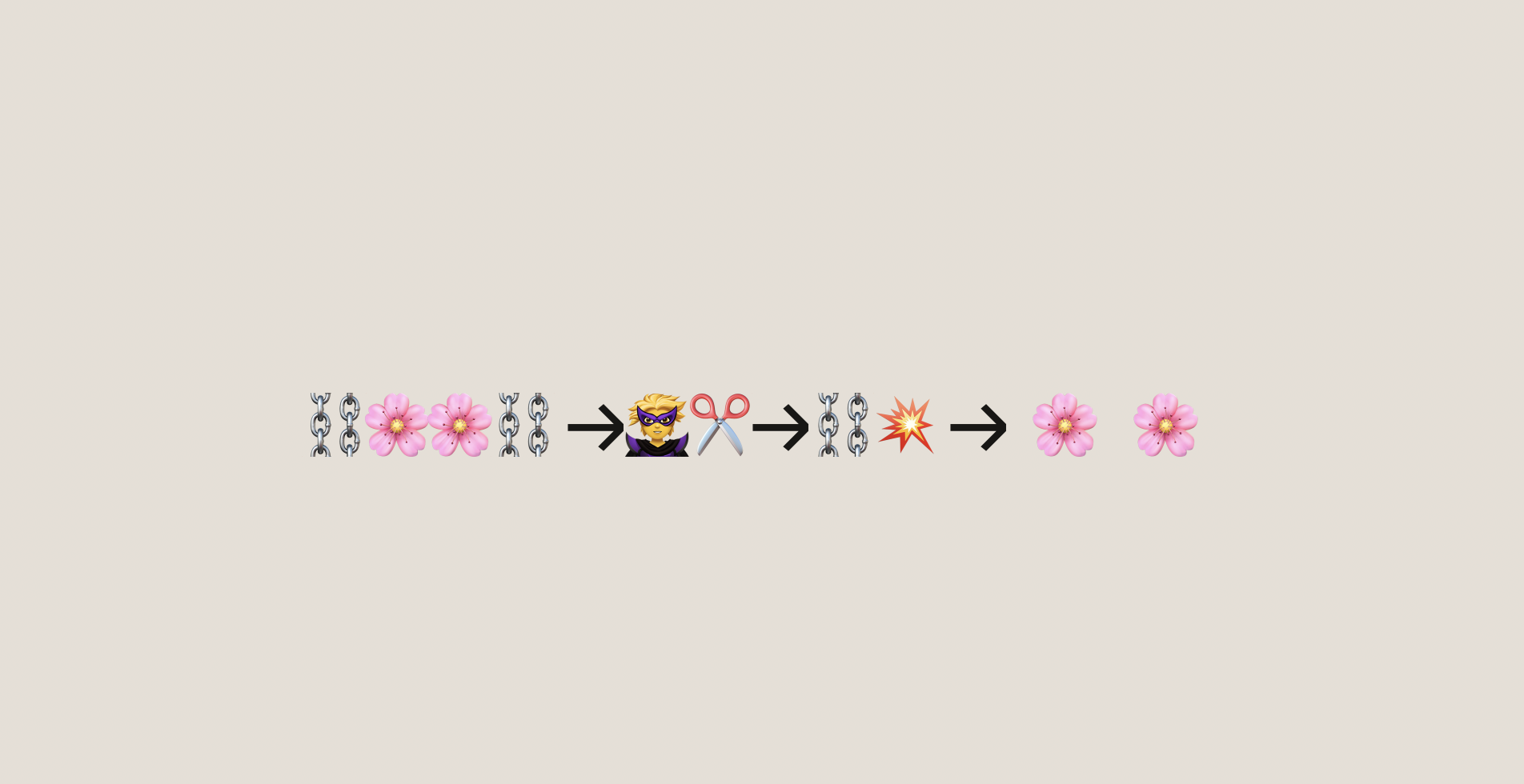
Start with clarity: can you explain what you do in ten emoji?
One of the most useful exercises in the session came from an unexpected place: fermentation chemistry.
Ioana described learning ‘enzymatic release’: two aroma molecules chained together, useless until an enzyme snaps the chain and releases the scent. Then she challenged the audience to distil the idea, not into a paragraph, but into ten emojis.
Why it works:
- Real understanding shows up in your ability to distil.
- Distillation forces you to find the truth of the thing.
- And that truth is exactly what your homepage hero needs.
Try it for your business:
- Explain what you do in ten emoji or fewer.
- Explain it to a five-year-old.
- Write a one-sentence version that a rushed, sceptical buyer can understand in one breath.
If that’s hard, you may have a clarity problem.
Memorable copy is rarely copy alone
Don’t underestimate the power of images to carry meaning.
Ioana used the example of the Norwegian World Cup team shirt design that went viral, not just because it was beautiful, but because it communicated without words:
- Teamwork.
- Equality.
- Calm and composure.
- Strategy.
The best copy lands hardest when it’s paired with the right visual.
A stock-photo handshake can kill a brilliant line. A strong visual can elevate a simple line into something iconic.
For high-impact areas, like the homepage hero, Ioana recommended running design and copy in parallel. Collaborate from the start so the final message works as a whole, not ‘words over here’ and ‘image over there’.
Related: How to define your tone of voice and use it for marketing, and why consistency matters more than you think.
A 30-second framework for standout lines: De Bono’s ‘Po’ provocation
Edward de Bono coined ‘lateral thinking’ in 1967, and one of his most useful tools is provocation (Po).
The process:
- Take the page you’re stuck writing.
- Say something deliberately wrong, absurd or impossible about it.
- Don’t judge it. Ask only: where does this take me?
- Harvest the real idea it uncovers.
Examples include:
- Accountancy firm: ‘We’ll do your accounts wrong.’ Provokes: maybe ‘accuracy’ isn’t the main value. Harvest: ‘Anyone can file your accounts. We’ll tell you what they mean.’
- Security software: ‘Our product does nothing.’ Provokes: ‘nothing happening’ is the desired outcome. Harvest: ‘Nothing happened today. You’re welcome.’
The absurd line helps you escape the gravitational pull of blue copy.
Force an analogy: connect your product to a random object
Another lateral thinking tool: introduce something unrelated, because your brain can’t help but connect ideas.
The exercise:
- Pick your product or service.
- Pick the first random object you can see. Ioana used a coffee cup.
- Build a bridge between them.
This is a fast way to generate:
- Analogies.
- Stories.
- Explanations that feel new, because they are.
Crucially, analogies make complex ideas easier to understand. That makes your copy more scannable and more memorable.
Rory Sutherland’s lesson: perception beats mechanics
Ioana pulled in ideas from Rory Sutherland’s Alchemy: humans don’t run on logic alone. We run on psychology.
A simple example:
- ‘Delayed by 20 minutes’ feels like punishment.
- ‘Arriving in four minutes’ feels like useful information.
- Same wait. Completely different experience.
That maps directly to website calls to action, forms and next-step messages.
Instead of vague, generic lines like:
- ‘Request a demo’.
- ‘We’ll be in touch shortly’.
- ‘Join our team’.
Give people a clear mental model of what happens next:
- ‘Book 20 minutes. No slides. No deck.’
- ‘You’ll hear from a human within one working day.’
- ‘Three interviews, three weeks, and you’ll hear either way.’
This is copy that reduces anxiety. It creates trust by setting expectations. It makes the experience feel designed.
The ‘Marmite exercise’: repel the wrong people on purpose
One of the most practical sections was about being brave enough to create polarity.
Ioana referenced classic examples:
- Avis: ‘We’re number two. We try harder.’
- Marmite: ‘Love it or hate it.’
Then offered a challenge:
List every cliché in your sector. Write the opposite. Keep the true one.
Examples:
- Instead of ‘Trusted by industry leaders’: ‘We only work with eight clients, and that’s on purpose.’
- Instead of ‘Enterprise-grade and scalable’: ‘Built for teams under 50 people. If you’re bigger, we’re the wrong choice.’
‘If nobody’s repelled, nobody’s attracted’ is the uncomfortable logic here.
Reminder: memorable copy isn’t people-pleasing copy.
A common trap: using the same call to action everywhere
Many companies write one call to action and paste it on every page.
It’s efficient, certainly. But it creates two problems:
- It becomes invisible through banner blindness and repetition.
- It isn’t contextual, so it doesn’t feel empathetic or relevant.
Instead:
Bring context. Tailor the call to action to the page it sits on.
The call to action should feel like the next natural step in the specific journey the reader is currently on, not a generic ‘book a demo’ stamp at the bottom of every page.
If you’re reviewing calls to action site-wide, these are useful starting points: The 7 qualities of an eye-catching and effective call-to-action and How to improve your website landing pages.
If you do nothing else, spend 80 percent of your time on headlines
Ioana ended with a punchy recommendation:
- Spend 80 percent of your time on headlines.
- Spend half of that on hero copy.
Because headlines are what people actually read.
For more headline-focused advice, see How to write copy for your website like a UI/UX genius, plus the related posts linked from it.
Headlines are your best chance to earn those extra seconds that turn ‘bounce’ into ‘engagement’.
Want a second pair of eyes on your homepage copy?
If anything above made you quietly open your homepage in another tab, our recommendation is simple.
Book 30 minutes with Matthew Stibbe, Founder and CEO of Articulate Marketing, for practical, hard-won advice drawn from 25+ years of marketing experience.
You’ll get clarity on where you’re blending in and what you could do to create something more memorable.


.jpg?width=100&height=100&name=1694622801428%20(1).jpg)


-1.jpg?width=400&height=250&name=national-historical-museum-of-sweden-nhm-P15K6_S-YWs-unsplash%201%20(1)-1.jpg)