Every sales manager wants more hot leads. Every marketing manager wants a better return from their advertising and PR spend. So this article explains how to make your landing pages work harder for your business.
The importance of landing pages
The goal is to turn a stranger into a customer. You can blog, you can keyword-optimise your content and index well on Google, and you can publish on social media, but if all people are doing is seeing your content, you’ve missed a big point behind producing it.
Sixty-three percent of B2B marketers cite generating traffic and leads as their biggest challenge. But, importantly, if you get 20,000 visitors a month to your website and no leads, that’s redundant data and a lot of wasted time. What’s essential, then, is the ability to convert these visitors into active leads.
Thank you pages
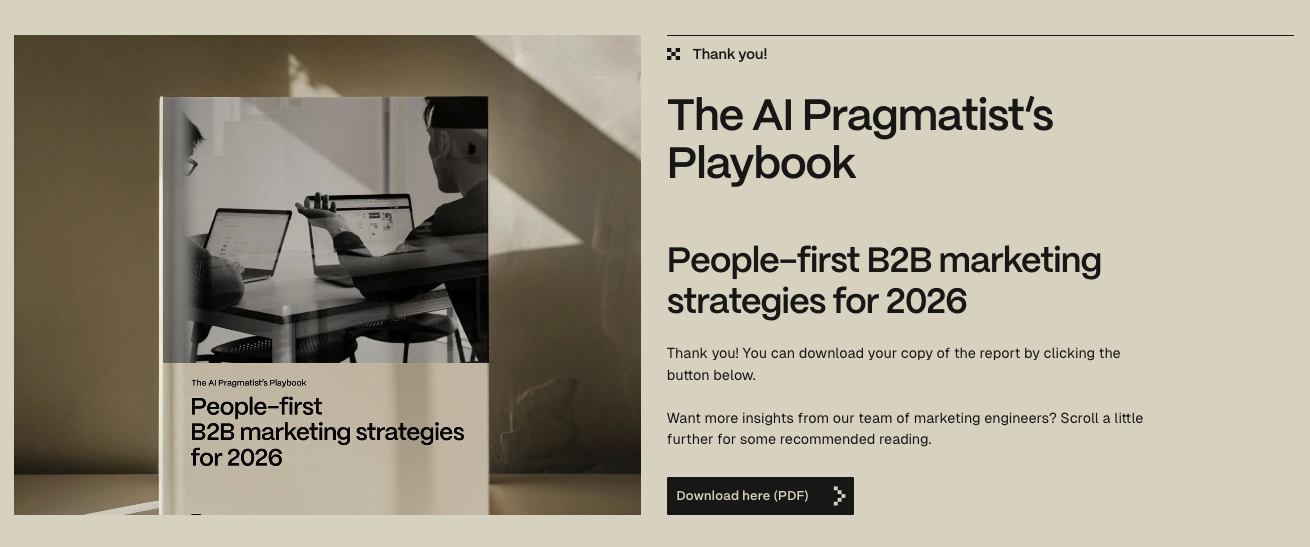
When someone fills in a form on a landing page, they get sent to a thank you page. That's a dedicated page that, firstly, thanks them (hence the name) for giving you a few bits of information, such as their email address, and secondly, provides the visitor (now a lead) with the gated content you promised.
It’s important to note that if you fail to give your lead a valuable piece of content in return for, say, an email address, they’ll feel cheated. And rightly so. We’ve all been falsely promised by a business before, and it stings.
Follow-up email
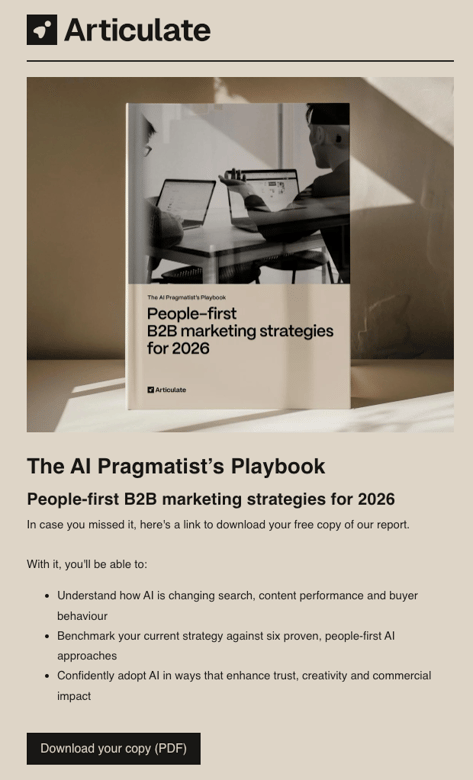
Now that you have your lead, you need to wrap up the visitor-to-lead portion of the inbound journey with a follow-up email.
This email has all the same information as the thank you page (it contains a thank you message and the promised content) but should also include a link to your blog and an opportunity to contact your business.
How to optimise a landing page
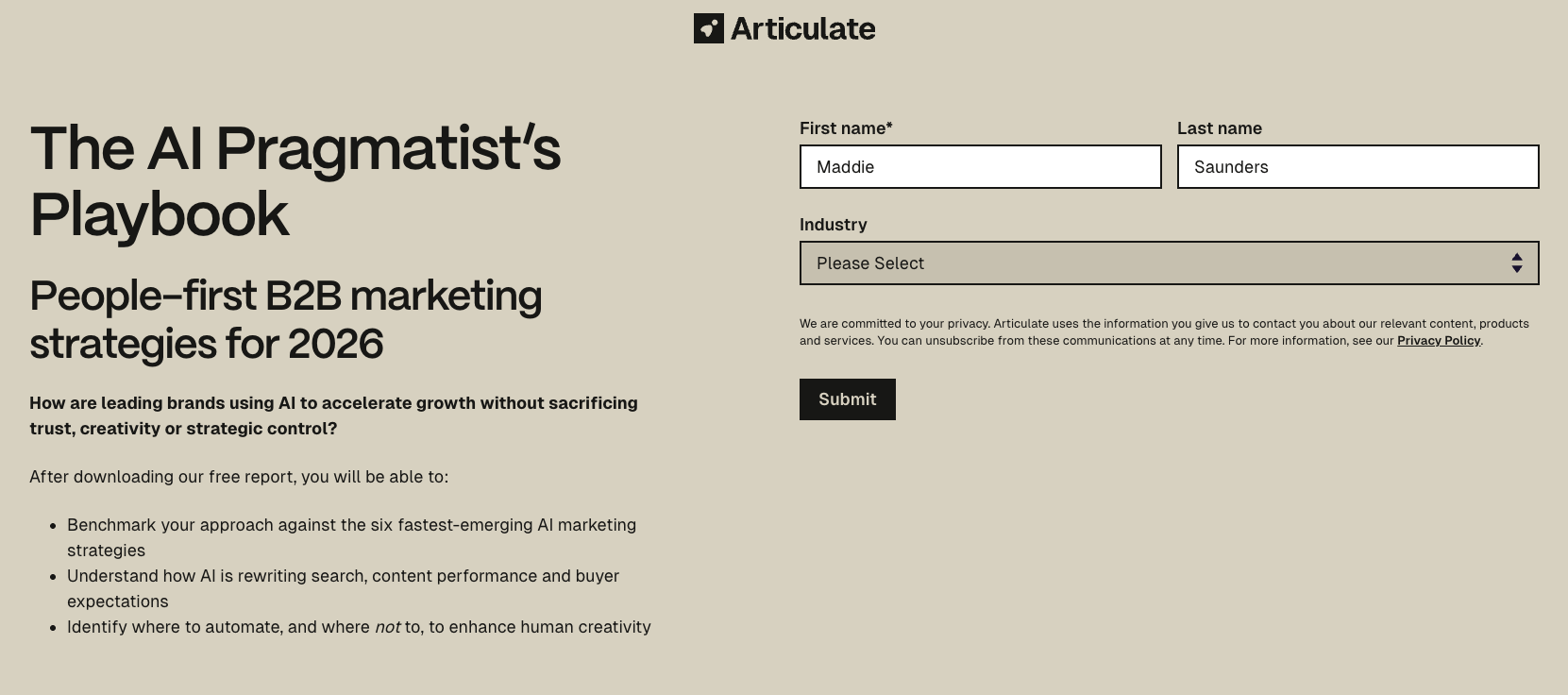
A landing page links your visitor’s needs with your products and leads them to some action. (If your landing page doesn’t do this, then it’s already broken.)
- Understand your visitors’ needs. This is the fundamental point. You can’t sell them something they don’t need.
- Talk about your stuff in their terms. Use their words and their language to describe what you’re selling and how it will help. Test copy on real people not on colleagues.
- Have a clear CTA. What do you want them to do? Make it very obvious with a big Tonka-Toy button with contrasting colours and imperative text.
- Highlight the benefit. Tell them why they should act and what they get.
- Make it easy for them to act. The more fields you ask people to fill in on a form, the less likely they are to complete it. Similarly, the more steps they go through on the checkout, the higher the chance that they will abandon the cart. Make forms as simple as possible.
Keep it simple, stupid
- Remove distractions. HubSpot recommends removing everything from your landing pages except the copy, your logo, the call to action and social media buttons. They even say get rid of your navigation menus. Just focus the visitor on the action.
- Cut copy. Short words are best. Shorter copy is also good. There’s no point filling up the page with words your customer isn’t going to read.
- Search engine optimise. Pick one focus keyword that links your customers’ needs, your product and the copy on the landing page. Optimise your copy for that word. Use the keyword and relevant variants of it in your page title, headline, body text, link anchor text and image alt and title tags. For more on SEO, check out our 19 top SEO tips to increase organic traffic.
- A/B testing. Our own experience suggests that A/B testing can massively improve conversion rates. Google Content Experiments and Optimizely can help here.
- Target your landing pages. Instead of trying to make one size fit all visitors, try producing variants of the page for different audience groups. For example, with Turbine, we get a lot of customers in hospitality and logistics so we’re planning on specific landing pages for these groups.
Use psychology to drive action
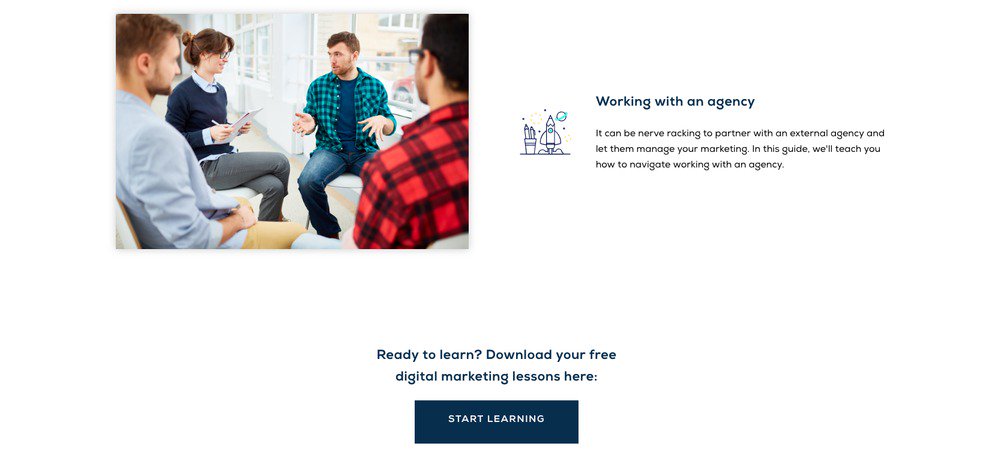
- Reciprocity. Give to get. You want the visitor to give their contact details so you need to offer something in return. Typically, that’s something like a white paper or a webinar.
- Urgency. You don’t want customers to take time to think or come back later because more often than not they won’t. Your call to action needs to indicate immediacy, urgency and timeliness.
- Scarcity. ‘Last five tickets’ is more compelling than ‘5,000 tickets remaining’.
- Social proof. People use other people as a shortcut for thinking. If lots of people do it, it’s probably okay. So make sure they know that lots of people do it. (This is why people walk past five empty restaurants to stand in line for the crowded sixth.)
- Follow up with an email. Now that you have your lead, you need to wrap up the visitor-to-lead portion of the inbound journey
- Use design to guide the customer. Use size and colour to indicate importance: the headline and call to action should stand out. Images and diagrams should lead the reader to the action you want them to take.
- Your home page is a landing page. Every page on your website is a landing page. But your home page more than any other. Make sure that it has a clear call to action too.
(This article was updated in March 2026 and includes contributions from Callum Sharp.)